AI governance in 2026: 10 components of an effective AI policy
14 minutes reading
An effective AI policy should define where AI may be used, who owns each use case, which data and systems it may access, what human oversight is required, and how performance, incidents and changes are monitored. The policy only becomes useful when those rules are connected to an AI inventory, named owners and operational controls.
That distinction matters in 2026. AI is moving from individual tools and isolated pilots into customer communication, decision support, data work and workflows connected to business-critical systems. At the same time, new EU AI Act transparency requirements started applying on 2 August 2026.
For leaders, the practical question is no longer whether the company needs principles for AI. It is whether those principles can guide a real decision when someone wants an assistant to use internal documents, an agent to prepare a master-data change, or an automated workflow to act across ERP, email and other systems.
Key takeaways
- An AI policy defines the rules. AI governance turns them into ownership, decisions, controls and evidence.
- Start with an AI system register. You cannot govern systems, agents and embedded features you do not know are in use.
- Match controls to the use case. A writing assistant and an agent that can update an ERP system should not have the same approval process.
- Treat data, permissions, human oversight and monitoring as parts of the solution, not as a review at the end.
- This article is operational guidance, not legal advice.
On this page
- What AI governance means
- What changed under the EU AI Act in August 2026
- The 10 components of an effective AI policy
- A practical AI system register
- Human oversight and levels of autonomy
- A 30-day starting plan
- Frequently asked questions
What is AI governance?
AI governance is the system of decision rights, policies, controls, records and review processes used to decide where AI may be used, who is accountable, how risk is managed and how an AI system is monitored throughout its lifecycle.
An AI policy is one part of that system. It describes the organization's expectations and boundaries. Governance also needs people with authority, a record of AI use cases, risk-based approval routes, technical and organizational controls, and a way to monitor what happens after launch.
This operational view is consistent with the voluntary NIST AI Risk Management Framework, which organizes AI risk work around four functions: govern, map, measure and manage. It also fits ISO/IEC 42001, the international standard for establishing and continually improving an AI management system.
The important point is simple: a policy document is not evidence that AI is governed. Evidence comes from how the organization makes decisions and operates AI in practice.
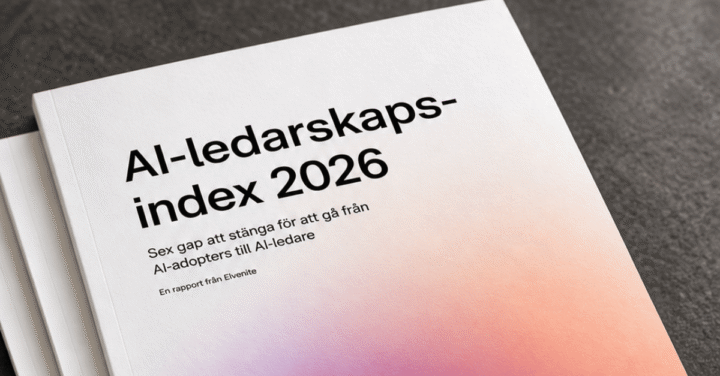
That gap between intention and practice is also visible in our study of AI leadership in Swedish organisations, which examines strategic governance alongside operational integration, business-value measurement, and data and technology readiness.
What changed under the EU AI Act in August 2026?
Several AI Act milestones now affect how European organizations think about governance. The exact obligations depend on the organization's role and the specific AI system, so this is a current orientation rather than a compliance determination.
| Area | Current position on 10 August 2026 | Practical implication |
|---|---|---|
| AI literacy | The obligation to take measures supporting AI literacy has applied since 2 February 2025. European Commission guidance says supervision and enforcement rules apply from 3 August 2026. | Train people according to their role, experience and the context in which they use or operate AI. Keep a practical record of the measures taken. |
| Transparency | Article 50 transparency obligations started applying on 2 August 2026. They cover defined situations such as direct interaction with certain AI systems and labelling specified AI-generated or manipulated content. | Define when users, employees or the public must be told that AI is involved and who owns that communication. |
| High-risk AI | The European Commission's current implementation timeline says the high-risk rules apply from 2 December 2027, with rules for AI embedded in regulated physical products applying from 2 August 2028. | Do not wait for the final deadline. Identify potentially high-risk uses now and build inventory, ownership, documentation and oversight capability. |
| GDPR | GDPR continues to apply when personal data is processed in the development or use of AI. | Include purpose, lawful basis, data minimisation, access, retention, information rights and data-protection review in the use-case process. |
The European Commission published Article 50 transparency guidance on 20 July 2026. Its current AI Act implementation overview provides the wider timeline. In Sweden, the Swedish Authority for Privacy Protection, IMY, maintains guidance on GDPR and AI, updated on 2 June 2026.
These rules are one reason to improve AI governance. They are not the only reason. Clear governance also helps prevent duplicated initiatives, unclear vendor commitments, uncontrolled data use and AI workflows that perform well in a pilot but cannot be trusted in daily operations.
The 10 components of an effective AI policy
The strongest policies are short enough to use and specific enough to guide decisions. Supporting standards, templates and procedures can carry the detail.
| Component | What the policy should establish | Operational evidence |
|---|---|---|
| 1. Purpose and scope | Why the organization uses AI and which employees, suppliers, systems and use cases the policy covers | Approved scope, definitions and policy owner |
| 2. AI inventory and ownership | Every material AI use case has a business owner and is recorded | AI system register with named owners |
| 3. Approved, restricted and prohibited uses | Which uses are allowed, require review or are not acceptable | Risk tiers, approval route and prohibited-use list |
| 4. Data and privacy rules | Which data may be used, for what purpose and under which access and retention rules | Data sources, classification, lawful-basis review and permissions |
| 5. Human oversight and autonomy | Which decisions stay with people and what actions AI may prepare or perform | Approval points, override, escalation and action limits |
| 6. Transparency and communication | When people must be told they are interacting with AI or receiving AI-generated content | Disclosure rules, labels and communication owner |
| 7. Testing and change control | How accuracy, robustness, bias, security and business fit are assessed before and after changes | Acceptance criteria, test record and release approval |
| 8. Security and third-party management | How access, integrations, vendors, models and data flows are reviewed | Vendor assessment, contracts, access controls and architecture record |
| 9. Monitoring and incident response | How performance, exceptions, complaints and incidents are detected and handled | Logs, metrics, incident route, rollback and review dates |
| 10. AI literacy and responsibilities | What different roles need to understand and who maintains capability | Role-based training, guidance, owner and evidence of measures taken |
1. Define purpose, scope and language
Start by defining what the policy covers. Include generative AI tools, AI features embedded in existing software, internally developed models, assistants, agents and automated decision support where relevant.
Also define the main roles. The organization may be a provider in one situation and a deployer in another. A policy should not force every employee to interpret regulation, but it should tell them when a use case needs specialist review.
2. Keep an AI system register
An AI system register is the practical starting point for governance. It creates a shared view of approved tools, embedded AI features, pilots, production systems and agentic workflows.
Do not limit the register to systems built by the organization. Include third-party services and AI capabilities added through cloud platforms, ERP extensions, analytics tools, productivity suites and supplier solutions.
A usable register should include:
| Register field | Example of what to record |
|---|---|
| Use case and purpose | What task, decision or workflow the AI supports |
| Business owner | Person accountable for value, acceptable use and ongoing operation |
| Technical owner | Person accountable for integration, access, logging and technical operation |
| Provider, model or product | External supplier and relevant version where available |
| Users and affected groups | Who operates the system and who may be affected by its output |
| Data sources and classifications | ERP fields, documents, personal data, confidential data and external sources |
| Allowed actions | Read, summarize, recommend, prepare an update or perform a defined action |
| Human oversight | Who reviews, approves, overrides or handles exceptions |
| Risk and review route | Current classification, required reviewers and approval status |
| Monitoring and review date | Metrics, incidents, last assessment and next scheduled review |
NIST's governance guidance explicitly includes mechanisms to inventory AI systems and resource them according to risk priorities. The value is not the spreadsheet itself. The value is that the inventory gives leaders somewhere to assign ownership, compare risks and stop unknown AI use from becoming operational dependency.
3. Separate approved, restricted and prohibited uses
A single list of AI principles is rarely enough. Employees need to understand what they can do without approval, what needs review and what the organization will not allow.
- Approved with normal safeguards: drafting non-sensitive internal text in an approved tool, with human review.
- Restricted and review required: using personal or confidential data, connecting AI to internal systems, producing customer-facing advice, or letting an agent prepare system updates.
- Prohibited: uses that break the law, bypass access controls, hide material AI involvement where disclosure is required, or make defined sensitive decisions without the required assessment and oversight.
The final categories must reflect the organization's systems, sector, risk tolerance and legal obligations. The policy should name who can update the categories as tools and regulation change.
4. Connect AI policy to data and privacy rules
AI governance fails when it treats the model as separate from the data it uses.
For each use case, record where the data comes from, who owns its meaning and quality, which permissions apply, whether personal or confidential data is involved, how long inputs and outputs are retained, and whether the provider may use the data for another purpose.
An AI policy can require data to be accurate, approved and fit for its intended use. Governance must then define who is responsible for making that judgment in each workflow. Clear accountability matters because, as we explain in our article on why data ownership is often the real AI bottleneck, unclear ownership can prevent AI initiatives from moving into reliable production.
5. Define human oversight and levels of autonomy
Not all AI use creates the same operational risk.
| AI use | Typical operational control | Example |
|---|---|---|
| Information support | User checks the answer before relying on it | Assistant summarizes internal instructions |
| Decision support | Qualified person makes the decision and can inspect relevant context | AI flags unusual supplier or order data |
| Human-in-the-loop execution | AI prepares an action; an authorized person approves it | Agent drafts a master-data update for review |
| Selected autonomous execution | AI performs a tightly defined action within permissions, monitoring and rollback controls | Agent completes a low-risk validated update under explicit rules |
The policy should define who can approve each level and what must be true before a use case can move toward greater autonomy. Human review should have real authority, enough context and a clear way to stop or override the system.
Our article on AI agents in operational workflows provides a deeper workflow-level assessment.
6. Make transparency a designed part of the workflow
Transparency is not solved by adding a general sentence to the privacy policy.
For each relevant use case, decide:
- who is interacting with or affected by the AI;
- what they need to know;
- when the information should be shown;
- how AI-generated or manipulated content should be marked where required;
- who owns the wording and evidence that the disclosure works.
The European Commission's July 2026 Article 50 guidance should be the starting point for a legal interpretation of specific transparency obligations. The operational policy should then translate the approved interpretation into the relevant interface, workflow and communication process.
7. Set testing and change-control requirements
An AI use case should have acceptance criteria before it is launched.
Depending on the workflow, testing may cover output quality, known failure modes, security, privacy, bias, robustness, permissions, latency, integration behaviour and the quality of human review. The team should also decide which changes require a new assessment: a new model, changed prompt, new data source, wider user group, new action or greater autonomy.
The goal is not to create one universal AI score. It is to define what reliable enough means for the specific use case and how that will be demonstrated.
8. Govern vendors, access and integrations
Many organizations will use AI through external platforms rather than build models themselves. The policy should therefore cover supplier review, contracts, data-processing terms, security, model and service changes, data location where relevant, exit planning and responsibility across the value chain.
For agents and connected workflows, include tool access and action permissions. An agent should receive only the data and actions required for its task. Read access, draft access and write-back access should be treated as different decisions.
9. Monitor operation, incidents and retirement
Approval is the beginning of operational governance, not the end.
Define what will be monitored, who reviews it and what happens when performance changes. Useful measures may include output quality, exceptions, manual overrides, complaints, failed actions, data-quality problems, security events, usage, time saved and business outcomes.
The process also needs incident reporting, escalation, rollback and a way to retire an AI system safely. If the workflow, data or provider changes, the register and risk assessment should change with it.
10. Build role-based AI literacy
AI literacy should fit the work people perform.
A general introduction may be enough for employees using an approved writing assistant. Process owners need to understand use-case risk, data and human oversight. Developers and platform teams need deeper knowledge of testing, logging, access and monitoring. Leaders and reviewers need to understand accountability and how to challenge a proposal.
The European Commission's current AI literacy guidance emphasizes measures that take account of people's knowledge, experience and the context in which AI is used. The practical response is a role-based capability plan, not one identical course for everyone.
A practical 30-day starting plan
An organization does not need to finish every governance document before improving control. It does need a clear sequence.
Week 1: Establish visibility
- Appoint an interim AI governance owner.
- Inventory approved tools, pilots, embedded AI features and production workflows.
- Identify uses involving personal data, confidential data, external communication or actions in business systems.
Week 2: Create decision routes
- Define approved, review-required and prohibited use categories.
- Assign business and technical owners to the most important use cases.
- Create a risk-based approval route involving privacy, security, legal or employee representatives where relevant.
Week 3: Connect controls to the top use cases
- Document purpose, data sources, permissions and allowed actions.
- Define human review, acceptance criteria, logging and incident handling.
- Check whether transparency or information requirements apply.
Week 4: Publish, train and review
- Publish a short policy and supporting use-case guidance.
- Deliver role-based AI literacy measures.
- Set review dates for the policy and priority systems.
- Select one governed workflow where business value and control can be demonstrated together.
This approach turns governance into an operating rhythm. It also creates a better starting point for AI agents, because the organization already knows which data, permissions, owners and review points belong to the workflow.
Where Elvenite fits
Elvenite is a Nordic specialist partner for Infor CloudSuite M3, Data Intelligence, AI and Managed Services. Our role is practical: helping operationally complex companies connect AI to the data, documents, business rules, integrations and workflows where value has to become real.
That includes identifying a useful first workflow, assessing data and system readiness, designing permissions and human oversight, and building logging, monitoring and long-term ownership into the solution.
Explore Elvenite Agentic AI if you want to move from broad AI interest to a governed first use case. For the data foundation behind AI, explore Elvenite Data Intelligence.
Frequently asked questions about AI governance
What are the key components of an effective AI policy?
An effective AI policy should cover purpose and scope, an AI system inventory, ownership, approved and prohibited uses, data and privacy rules, human oversight, transparency, testing, security, vendor management, monitoring, incident response and role-based AI literacy. Supporting procedures should explain how teams apply these rules to individual use cases.
Is an AI policy enough to comply with the EU AI Act?
No. A policy can support compliance, but obligations depend on the organization's role and the specific AI system. Compliance may also require system classification, documentation, transparency, human oversight, monitoring, data governance, training and other measures. Obtain qualified legal advice for an assessment of your organization and use cases.
What should an AI system register contain?
Record the use case, purpose, business and technical owners, provider or model, users and affected groups, data sources, allowed actions, human oversight, risk classification, approval status, monitoring measures, incidents and review dates. Include third-party tools and embedded AI features, not only systems built internally.
Who should own AI governance?
Executive leadership should set direction and risk tolerance, but individual use cases need named business and technical owners. Privacy, security, legal, HR, data and employee representatives may also need defined review roles. Ownership should stay close enough to the workflow to make operational decisions and maintain the system after launch.
How often should an AI policy be reviewed?
Set a scheduled review at least annually, then add event-driven reviews when regulation, providers, models, data sources, system permissions or organizational use change materially. High-impact use cases may require more frequent operational review even when the overall policy remains unchanged.
Does every AI workflow need human approval?
Not every individual action requires approval. The level of oversight should match the use case, data, affected people and possible impact. Many workflows should begin as decision support or human-in-the-loop execution. Greater autonomy should require clear boundaries, tested controls, monitoring, escalation and rollback.

Related news

AI for Infor M3: when to use Velocity Suite, extend it or build custom agents
Swedish companies score only 39 out of 100 in new AI Leadership Index