Leading in the age of AI: from questions to business value
6 minutes reading
AI is often described as a technology shift. That is true, but it is not the whole story.
The more interesting question is what happens when AI moves from isolated tools into the way companies actually operate: how decisions are made, how data is trusted, how people work together, and how leaders turn possibility into real business value.
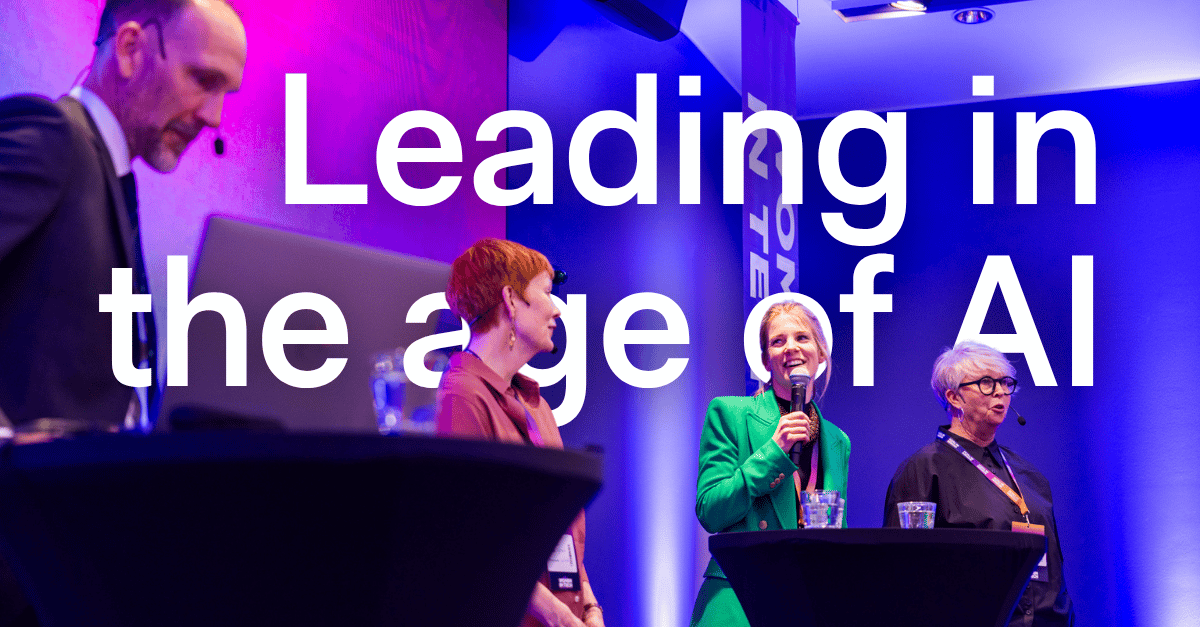
That was the useful thread in Elvenite's Women in Tech focus session on leading in the age of AI.
The conversation was moderated by Mathias Dyberg, CEO of Elvenite, with panelists Boel Sjöstrand, Deputy CEO at CombinedX; Louise Nilsson, CIO of Lantmännen Agriculture; and Nathalie Malmholm, Manager Business Execution, Group IT at Nederman Holding.
The session was not only a discussion about AI. It was a reminder of something that sits close to Elvenite's own view of technology: technology alone is never the answer. How it is understood, applied, governed, and connected to the business is what makes the difference.
Key takeaways
- AI leadership starts with better questions, not only better data.
- AI must be connected to real business value, not treated as a separate innovation track.
- Human accountability remains central, even when AI supports decisions.
- AI exposes the gaps between data, systems, processes, and ownership.
- Leaders need to combine structure with room to test, learn, and adapt.
- Diverse and inclusive leadership traits become more important when complexity increases.
Better questions matter more than faster answers
Early in the session, the audience was asked to choose between better data and better questions. The majority chose better questions.
That choice says a lot about the AI moment many companies are in.
More data, more tools, and more automation do not automatically create better decisions. They can help, but only when leaders are clear about what they are trying to understand, improve, or change.
This is where AI becomes a leadership question.
If the question is weak, AI may only help the organization move faster in the wrong direction. If the question is connected to the business, AI can help people see patterns, test assumptions, and act with more confidence.
For us, that is close to the core of Data Intelligence: not producing more reports or adding another layer of technology, but helping companies use data for decision support, automation, and practical effect in daily operations.
AI has to move from potential to business value
One of the strongest threads in the panel was prioritization.
AI creates many technical opportunities. But not every opportunity should become a project. In complex organizations, the harder work is deciding where AI creates real value, which processes need to change, and which business assumptions need to be challenged.
We work with companies where ERP, data, AI, integrations, and business-critical operations are closely connected. In that reality, AI cannot sit on the side as a disconnected experiment. It has to work with the systems, data flows, processes, and people that already carry the business.
The practical question is not only: what can AI do?
It is: what business value should AI help us create, and what needs to be true in our data, systems, and organization for that value to become real?
Accountability stays with people
The panel also drew a clear line between AI support and human responsibility.
AI can help teams understand information, test ideas, and make wiser decisions. But accountability stays with people. Leaders still need to own direction, trust, and judgment.
That distinction matters.
When AI becomes part of daily work, it is tempting to treat the tool as a neutral answer machine. It is not. AI needs context, control, and human review.
This is one reason we believe the human side of technology becomes more important, not less. The value does not come from replacing judgment. It comes from strengthening the way people use data, ask questions, and make decisions.
In other words: AI can support the work, but people still carry the responsibility for what the business chooses to do.
AI exposes the gaps organizations need to close
A useful point from the panel was that AI does not only create new challenges. It also exposes old ones.
When AI starts being used more broadly, fragmented data, scattered processes, unclear ownership, and business/IT gaps become harder to ignore. Problems that were previously hidden inside manual work or local workarounds suddenly become visible.
This is important.
Many companies want to talk about AI use cases. That is understandable. But AI use cases rarely succeed in isolation. They depend on data quality, business ownership, process understanding, platform decisions, and the ability to keep improving after the first version is live.
That is why AI leadership cannot be left to technology teams alone.
The business needs to step closer to IT. IT needs to keep translating technology into business value. And leaders need to treat AI adoption as an organizational question, not only a tool question.
In many companies, the legacy challenge is no longer only technical. It is organizational.
Closing that gap is where real progress starts.
Our AI Leadership Index 2026 puts numbers behind this challenge, showing where Swedish organisations are progressing and where six recurring gaps still hold back the move from experimentation to business value.
Culture needs both structure and room to learn
The panel returned several times to learning, testing, failure, and structure.
That combination matters. Fast change does not mean companies should move without direction. It means they need enough structure for teams to know how to handle uncertainty, and enough trust for people to test, learn, and adjust.
This is also where long-term responsibility matters.
AI is not something most companies will solve through one project, one workshop, or one isolated proof of concept. The work needs to continue after the first idea has been tested. It needs governance, support, development, and a clear connection to how the business actually operates.
That is why the leadership challenge is not only to start. It is to keep moving in a way that creates durable value.
The companies that move well will be the ones that can test in a controlled way, learn quickly, and keep connecting the work back to business value.
Diversity belongs in the AI leadership conversation
The Women in Tech context gave the discussion an important leadership angle.
The panel discussed traits often associated with inclusive leadership: collaboration, listening, asking questions, lower prestige, and making room for different perspectives. In complex AI-driven environments, those traits are not soft extras. They help teams navigate uncertainty.
AI increases the need for people who can manage complexity without simplifying away the human perspective.
This matters because AI is never only about models or platforms. It affects roles, decisions, processes, priorities, and trust. That means organizations need people with different perspectives close to the work: business, IT, data, operations, leadership, and users.
Companies with broader perspectives are better placed to challenge assumptions, notice bias, ask better questions, and understand how AI affects different parts of the organization.
AI may be technical, but successful AI adoption is deeply human.

Skills are built through learning, partners, and practice
The final part of the session touched on AI skills shortage.
The point was practical: AI skills shortage is not one single gap. It can mean prompt skills, understanding enterprise applications, working with data, knowing how to apply AI in operations, or knowing how to lead teams through change.
That means companies need several responses at once.
They need to help existing teams learn. They may need to recruit new capabilities. And they can use partners to move faster while building internal confidence and competence.
This is another reason AI needs to be connected to business reality.
The strongest AI capability will not come from one isolated expert group. It will come from combining business understanding, technical skill, data quality, leadership, and practical use.
That is also where a specialist partner can make a difference: helping companies move from ambition and scattered ideas to structure, implementation, and continuous value over time.
What leaders can take from the session
The message from the Women in Tech panel was clear: AI changes what leaders need to pay attention to.
Ask better questions. Connect AI to real business value. Keep humans accountable. Fix the organizational problems AI makes visible. Build cultures where people can learn. And make room for different perspectives in the work.
The value is not in technology for its own sake. The value is in closing the gap between data and business excellence: making sure data can be trusted, systems support the business, AI is applied with purpose, and people can turn insight into action.
That is where AI leadership becomes more than a topic for discussion.
It becomes part of how companies operate, compete, and create long-term value.
If you want to work where technology, business value, and long-term development meet, explore life at Elvenite.
FAQ
Companies can build AI capability by helping existing teams learn, connecting AI use cases to business problems, improving data and process foundations, recruiting selectively, and working with partners where external expertise speeds up practical progress.
The session focused on leading in the age of AI, with practical discussion around questions, business value, human accountability, organizational change, culture, diversity, and the leadership traits needed in complex environments.
AI gives teams access to more information and automation, but it does not remove the need for judgment. Leaders still need to decide what matters, where value is created, how risks are managed, and how people adapt to new ways of working.
AI leadership is the ability to guide how an organization uses AI to create business value. It includes asking the right questions, setting direction, managing risk, building trust, and helping teams learn how to use AI responsibly in daily work.

Related news
Swedish companies score only 39 out of 100 in new AI Leadership Index

Blentagruppen selects Elvenite for Infor CloudSuite Food & Beverage