AI workshop: The method that helps large companies scale AI successfully
5 minute read
Large organizations want to work with AI - but very few succeed in scaling their initiatives.
Many have tested pilot projects, experimented in isolated parts of the business, and built early proofs of concept. But then nothing happens. Projects stall, the value becomes unclear, and the organization gets stuck asking:
“What should we do? Where do we start? And how are other companies actually succeeding?”
This is exactly where a well-structured AI workshop makes the biggest difference. Not by generating another list of ideas — but by building real understanding, identifying concrete use cases, and producing a clear roadmap the organization can act on.
In this article, we share our method, our insights, and our firsthand experiences from running AI workshops for large companies in industries such as manufacturing, food, logistics, retail, and energy.
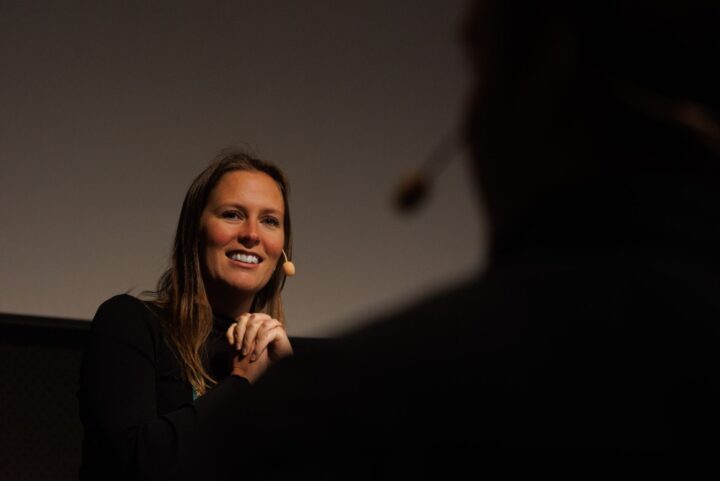
Elvenite has for several years been able to support companies on the journey from AI pilot to more scalable solutions – and we have helped several larger companies translate AI into concrete benefits in everyday life.
Why large companies need an AI workshop
We primarily work with large organizations with relatively high digital maturity - companies with solid systems, good data quality, and a strong desire to work with AI. The challenge? They lack direction.
Across sectors, we see the same patterns:
- AI initiatives have been tested on a small scale but have never been scaled.
- Decision-makers want to understand what AI can actually contribute.
- Employees are curious but uncertain about what is realistic.
- They know the value exists - but not where.
An AI workshop therefore becomes both a kickoff and a clarifying force:: What is possible? What is profitable? And what should we do next?
The secret behind our AI workshop method (and why clients appreciate it)
We have seen time and time again that AI projects fail due to behaviours, not technology.
That’s why our AI workshop is built on three core components:
1. We combine technology, business understanding and cultural change
AI doesn’t lift off with technology alone. We know this from working hands-on in transformation programs where culture and behaviour have proven to be the biggest barrier.
That’s why we start every AI workshop by setting the stage:
- How does AI impact their specific industry?
- What are other companies that have become successful doing?
- What experiences do we have from real implementations?
This creates a shared understanding - and above all: engagement.
2. We show real use cases - not hypothetical scenarios
Business value is created when participants see something concrete. When we show how other companies have automated processes, created predictive models or implemented RAG solutions, something happens in the room. Suddenly, AI is no longer "the future" - but "this is what we can do today!".
3. We move from strategy to action - in the same workshop
Many workshops end with a pile of post-it notes filled with ideas. Ours end with:
- A prioritised list of tactical use cases
- Description of the prerequisites for realising them
- Clear recommended initiatives
- A roadmap that is actually actionable
That is the entire difference between "wanting to do AI" and actually doing it.
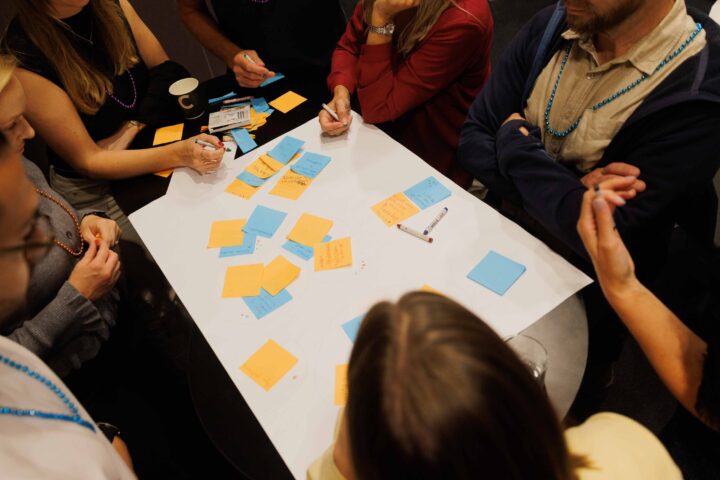
How we usually structure an AI workshop
Our workshop consists of three distinct parts.
- First, we set the scene by educating the participants, sharing insights, and creating a shared understanding of what AI means for their specific business.
- Next, we work with use cases where we jointly identify opportunities, base our work on the business processes, and prioritise what creates the most value.
- Finally, we deliver a clear roadmap with recommended initiatives, a prioritisation of use cases, and concrete next steps that the organisation can begin to work on immediately.
Our experience: from strategy to implementation
We have led AI projects throughout the entire lifecycle – from strategy to implementation. Our assignments have included:
- Development of predictive models in production
- Optimisation models for procurement and logistics
- Automation of document-intensive processes
- RAG solutions that have made information available in seconds
- Transformation journeys where the workshop has been the starting point
Our workshops are based on real experiences - not theory. We know what works, what is challenging, and what is required for change to take place in practice.
Click here to book your own AI workshop tailored to your processes, needs and level of ambition.

Three examples where an AI workshop made a measurable difference
Food industry – better planning through prediction
A company went from fragmented data to predictive models for production planning. The result was less waste, better capacity utilisation, and faster decisions.
Manufacturing – optimised raw material orders
By identifying the right use case during a workshop, a model was built that created more stable inventory, reduced costs, and increased delivery reliability.
Document-heavy operations – AI that relieved the entire organisation
A RAG solution enabled users to query their documents directly and get answers in seconds. It transformed workflows, quality, and speed.
Which AI use cases provide the fastest ROI?
It's not about the most advanced models – but about the most everyday problems. Time and time again, we see that value often arises in:
- Information retrieval that is currently slow
- Document flows where manual work dominates
- Reporting that requires a lot of administrative time
- Simpler predictions that improve planning
- Small decision support that relieves employees
The point is to start where the threshold is lowest and the impact is greatest.
Which roles should participate in an AI workshop for the best results?
The most successful workshops have one thing in common: the business is heavily represented. The people who truly understand the processes and the pain within them are crucial.
IT and data roles should also be involved, not to take over the discussion, but to ensure understanding, opportunities, and the right expectations. When both worlds meet, the result is both realistic and achievable.
Common mistakes large organizations make when starting with AI - and how we solve them
The most common mistake is trying to start too big and too technically, far from the reality of the business. Many lack clear use cases and therefore get stuck in strategy without moving on to implementation. Others worry about risks, data or technology and become cautious.
Our way of solving this is to:
- Start small
- Work closely with the business
- Provide concrete examples that create understanding and engagement.
By quickly realising an initial use case, both trust and the willingness to continue developing the organisation's AI capability are built.
Why an AI workshop is the fastest path from intention to reality
A good AI workshop is not an inspiration day – it is an accelerator. It provides direction, reduces uncertainty, and creates momentum. It helps large companies make decisions based on reality, not hype.
And above all: it enables starting small, creating value, and building capability for real.
FAQ
Frequently asked questions about our AI workshop
Price and value depend on the scope, but our model is built to create impact quickly and with low risk. We always work with:
-
Clearly defined use cases
-
Realistic expectations
-
Cost estimates and ROI indications for each initiative
This means that already after the workshop, you know which investments are most profitable and what timeline to expect.
No technical preparation is required. However, we recommend:
-
Involving the right people — especially those who understand the operations in detail
-
Reflecting on where you experience the most friction today
-
Bringing a few examples of processes, reports, or documents
The more concretely the operations can be described, the sharper the outcome will be.
After the workshop, you will receive a prioritized roadmap and clear recommendations for the steps you should take right away. We can then support you further in whatever way suits you best:
-
Proof of concept for the most promising use case
-
Data analysis to validate opportunities and prerequisites
-
Implementation of ready-to-use AI solutions
-
Capability building and training to strengthen your internal AI competence
The point is that you don’t need to start from scratch, you have a ready-made plan you can act on that same week.
It depends on your business, but some areas tend to deliver a fast ROI regardless of industry:
-
Automation of document and information flows
-
Predictions that improve planning or forecasting
-
Faster and more accurate decision support
-
AI that reduces administrative or routine work
-
Lightweight optimizations of purchasing, inventory, or production
During the workshop, we identify exactly which steps in your processes are the most value-driving to start with.
The key is to anchor AI efforts in the goals of the business — not in technical ambitions. In our AI workshops, we therefore always work closely with process owners and key operational roles. They are the ones who define the problems — and therefore also own the solutions. IT is involved to ensure feasibility and long-term sustainability, but the driving force comes from those with the business knowledge.
After the workshop, we help you establish structures, roles, and ways of working that make AI an integrated part of the organization — not a side project.
Would you like to know what an AI workshop would look like for your organisation?
Get in touch and we will create a session tailored to your processes, needs and level of ambition.
Related news

AI for Infor M3: when to use Velocity Suite, extend it or build custom agents
Swedish companies score only 39 out of 100 in new AI Leadership Index